
Pig Tracking 101: Knowing Where Your Pig Is—and Knowing It Got There
Launching a pig is only the beginning of the run.
Where is it now? Did it pass the road crossing? Has it made it through the section that caused problems before? Did it reach the receiver? And if it didn't—where was the last place you know it passed?
Those are the questions that matter in the field.
Pipeline pig tracking gives operators a way to monitor pig movement, confirm passage at important locations, and gather information that can be extremely valuable when a run doesn't go exactly as planned.
But one of the first things we tell customers is this:
There isn't one piece of pig tracking equipment that's right for every job.
A transmitter, geophone, Pig Popper®, and non-intrusive sensor don't all do the same thing. Before choosing equipment, we need to understand what you're trying to accomplish.
At Enduro, that's where the conversation starts.
First Question: What Do You Need to Know?
When someone calls Enduro asking about pig tracking equipment, the first question shouldn't be, "Which product do you want?"
It should be:
What do you need to know during the run?
Do you need to know:
- Whether the pig left the launcher?
- Whether it passed a specific location?
- Where it is along the right-of-way?
- Whether it made it through a difficult section?
- Whether it reached the receiver?
- Where to start looking if it doesn't arrive?
Those are different problems, and they may require different equipment.
That's why we separate pig tracking into two basic objectives: locating the pig and confirming pig passage.
Locating a Pig vs. Confirming Pig Passage
This distinction matters.
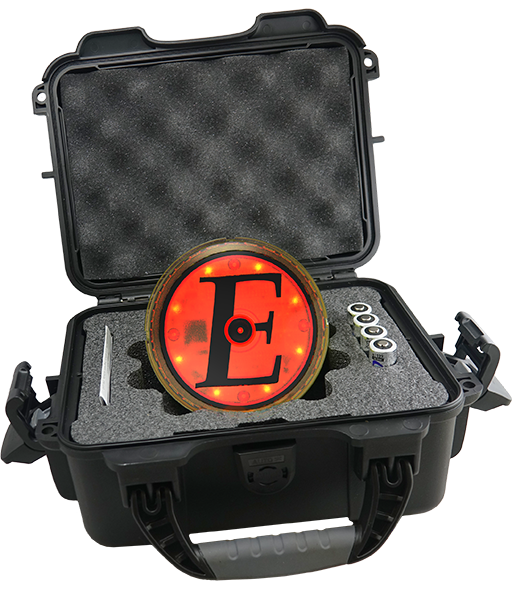
If you need to locate a pig, an electronic transmitter and compatible receiver may be the right approach. The transmitter travels with the pig and provides a signal that field personnel can detect from above ground.
If you need to confirm that a pig passed a particular location, a Pig Popper, Non-Intrusive Pig Sensor, or geophone may make more sense.
Sometimes you need both.
For an important cleaning, gauging, commissioning, or inline inspection run, operators may establish multiple confirmation points rather than relying on one piece of information at the end of the line.
The goal isn't to use more tracking equipment. The goal is to give your team the information it needs to manage the run.
How Do You Choose a Pipeline Pig Tracking Method?
Choosing the right pipeline pig tracking method starts with determining whether you need to locate the pig, confirm pig passage, or both.
If crews need to locate a pig along the pipeline, an electronic transmitter installed in or on the pig and compatible receiving equipment may be appropriate. If the primary objective is confirming that a pig passed a particular location, a Pig Popper®, Non-Intrusive Pig Sensor (NIPS), or geophone may be a better fit.
Consider:
- Need to locate the pig: Electronic transmitter and compatible receiver
- Need permanent passage confirmation: Pig Popper® or NIPS
- Need portable passage confirmation: Geophone
- Need information at multiple points: A combination of tracking and passage-detection methods
Pipeline diameter, wall thickness, depth of cover, pig configuration, monitoring locations, accessibility, and field conditions can also affect equipment selection.
There is no single tracking method that is best for every pipeline. The right approach is the one that gives the field team the information needed to safely and effectively manage the run.
How Do Pipeline Pig Transmitters Work?
Pipeline pig transmitters travel with the pig and emit an electronic signal that compatible receiving equipment can detect from above ground. This lets field personnel track the pig's progress along the pipeline, confirm its location at planned monitoring points, or narrow the search area if the pig doesn't arrive where expected.
A transmitter is typically installed in a transmitter cavity or securely mounted to the pig. As the pig moves through the pipeline, the transmitter continues to emit its signal. Field personnel use a compatible receiver along the pipeline right-of-way to detect that signal.
Transmitter performance can depend on several application-specific factors, including:
- Pipeline diameter and wall thickness
- Depth of cover
- Transmitter frequency
- Receiver compatibility
- How the transmitter is mounted to the pig
- Pipeline and field conditions
The transmitter and receiver must be compatible, and you should select the appropriate equipment for the specific pipeline and tracking application.
A transmitter travels with the pig; the receiver is the equipment used above ground to detect the transmitter's signal.
What Transmitter Frequency Should I Use?
We get this question regularly, and frequency alone isn't enough information to select the right transmitter.
We would rather ask a few more questions than recommend equipment based on one number.
Things we may want to know include:
- What size is the pipeline?
- What is the pipe wall thickness?
- How deep is the line?
- What type of pig are you running?
- How will the transmitter be mounted?
- What receiver will your crew be using?
- Where will the crew be tracking the pig?
- What are the conditions along the right-of-way?
Those details matter.
If you're unsure which transmitter you need, call us with the application. Our team can help you work through the options instead of asking you to guess from a product list.
What Is a Pipeline Geophone?
Sometimes the pig tells you where it is simply by making noise.
A geophone detects and amplifies the normal sounds and vibrations created as a pig moves through the pipeline. Field personnel can position the equipment at a monitoring location and listen for the pig to pass.
This makes a geophone particularly useful when the objective is passage confirmation rather than electronic location tracking.
Of course, pipelines aren't quiet environments.
Ground conditions, surrounding equipment, traffic, background vibration, pig design, pipeline characteristics, and where the geophone is positioned can all affect what the operator hears.
That's why geophones are tools—not magic boxes. Field conditions still matter.
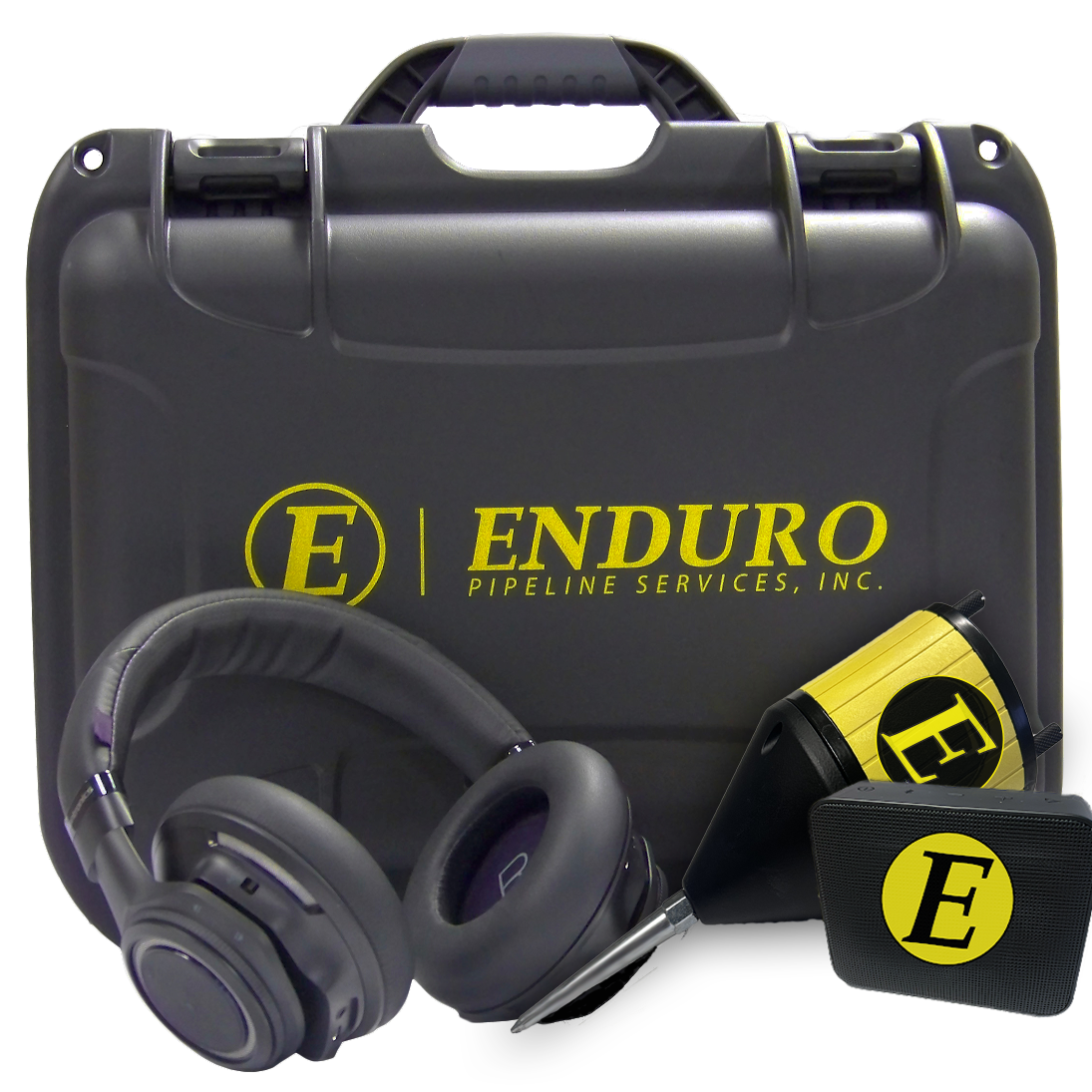

Why Did Enduro Build a Wireless Geophone?
Anyone who spends time on a pipeline right-of-way knows that less equipment to fight with can be a good thing.
The Enduro Wireless Geophone (EWG-1) was designed to make acoustic pig detection simpler in the field.
The system amplifies the normal noise created by pig passage while wireless headset and speaker capability allows the operator to move around the monitoring area without being tied to a traditional wired setup.
The EWG-1 was built around a straightforward idea:
Give the person standing on the right-of-way a practical way to hear the pig coming.
It's compact, rugged, and designed for actual pipeline field conditions.
What Is an Enduro Pig Popper®?
If you have worked around Enduro for very long, you've probably seen a Pig Popper.
There's a reason operators have been using them for years.
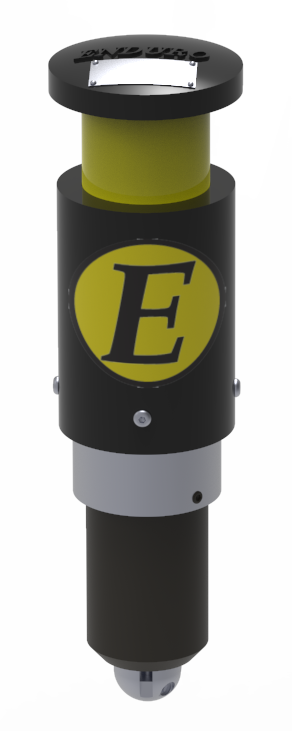
The Enduro Pig Popper is an intrusive pig passage indicator installed at a fixed location on the pipeline. When the pig passes, the device provides a physical indication of passage.
It's simple information, but it's important information:
The pig made it past this point.
Pig Poppers can be installed at strategic locations where crews repeatedly need passage confirmation.
If you're planning a new pipeline, launcher/receiver installation, facility upgrade, or future pigging program, that's a good time to think about where permanent pig passage indication would make life easier for the crews who will operate that line for years to come.
What Is a Non-Intrusive Pig Sensor?
Not every operator wants an intrusive passage indicator.
That's where a Non-Intrusive Pig Sensor, or NIPS, can come into the conversation.
A non-intrusive sensor provides pig passage detection without requiring a detection component to extend into the pipeline bore.
The important question isn't whether intrusive or non-intrusive technology is "better."
It's: Which approach makes sense for this location and this pipeline?
Pipeline configuration, installation requirements, accessibility, maintenance considerations, and the operator's preferences all matter.
That's the kind of application discussion our team would rather have before selecting equipment.
How do non-intrusive pig detection systems work? A non-intrusive system monitors pig passage from outside the pipeline rather than using a component that extends into the pipe bore. When the system detects the change associated with a pig passing the monitoring location, it provides an indication of passage. This allows operators to confirm that the pig reached or passed a specific point without an intrusive detection component inside the pipeline.
Pig Popper or NIPS: Which Should I Use?
This is exactly the kind of question we don't believe in giving customers a canned answer for.
A Pig Popper provides intrusive passage indication.
A NIPS provides non-intrusive passage detection.
Both can provide valuable confirmation that a pig passed a fixed location, but the best choice depends on how and where the equipment will be used.
If you're trying to decide between the two, tell us about the installation.
We'd rather understand the pipeline and recommend the appropriate option than tell you one product is always better than the other
Pig Popper or Geophone?
These two products solve different field problems.
A Pig Popper stays at a defined location and provides passage indication when a pig moves past that point.
A geophone goes with the field crew and can be used at selected monitoring locations to listen for pig passage.
Think about the question you're trying to answer.
"Did the pig pass this permanent location?"
A fixed passage indicator may make sense.
"Can my crew confirm passage at different locations along the ROW?"
A portable geophone may be more useful.
And sometimes the answer is both.
How Do You Confirm Pig Passage?
There are several ways to do it.
Depending on the application, crews may use:
- Pig Poppers
- Non-Intrusive Pig Sensors
- Geophones
- Electronic transmitters and receivers
- Multiple confirmation methods during the same run
The bigger issue is where you need confirmation.
Before the pig launches, think through the pipeline.
Where would knowing that the pig passed be especially valuable?
A difficult section? A road crossing? A valve? An intermediate location? The receiver?
Planning those points before the run can give the field team much better information if something unexpected happens later.
How Accurate Is Pipeline Pig Tracking?
We'd be cautious of anyone who gives you one accuracy number without knowing anything about your pipeline.
There are too many variables.
Tracking and detection performance can be influenced by:
- Pipeline diameter
- Wall thickness
- Depth of cover
- Soil and ground conditions
- Pig configuration
- Transmitter and receiver compatibility
- Background noise and vibration
- Equipment placement
- Accessibility
- Field conditions
That's why Enduro approaches tracking equipment as an application question, not simply a product-selection question.
How Do You Locate a Pipeline Pig Underground?
To locate a pipeline pig underground, install an electronic transmitter in or on the pig, then use a compatible receiver above ground to detect the transmitter's signal. This lets field personnel locate the pig or narrow the search area along the pipeline.
The transmitter travels with the pig and emits a signal that can be detected from above ground. During a normal pigging operation, crews can use the receiver at planned locations along the pipeline to track the pig's progress and confirm where it has traveled.
If a pig does not arrive at an expected location, the same transmitter-and-receiver system can help narrow the search area. If the crew knows the pig passed one monitoring point but did not reach the next, personnel can search between those locations for the transmitter's signal.
A geophone can also provide useful passage information by allowing crews to detect the sound or vibration associated with a pig moving through the pipeline. However, a geophone serves a different purpose than an electronic transmitter and receiver. It primarily detects pig passage at a monitoring location rather than electronically locating the pig underground.
The right tracking method depends on what your crew needs to know:
Do I need to locate the pig—or do I need to know that it passed here?
If you need to locate the pig, an electronic transmitter and compatible receiver are typically the better choice. If you need to confirm passage at a specific location, a geophone or fixed pig passage indicator may be appropriate.
Planning the tracking method before the run gives field personnel better information if the pig slows, stalls, or does not arrive where expected.
What Happens When the Pig Doesn't Show Up?
This is when good tracking planning becomes especially valuable.
Suppose your crew confirmed the pig passed Point A.
It never passed Point B.
You now know something important that you wouldn't know if the only plan had been to wait at the receiver.
Your search can begin between those locations.
If the pig is carrying an electronic transmitter, field personnel may also use compatible receiving equipment to search for its signal and further narrow the location.
This is why we encourage operators to think about tracking before the run, not after there's a problem.
Tracking equipment doesn't prevent every stalled pig.
It gives your team information when they need to figure out what happened.
What Tracking Equipment Do I Need for My Pigging Operation?
Don't start with the equipment. Start with these questions.
What are you running?
A cleaning pig? Gauging pig? Batching pig? ILI tool?
What do you need to know?
Location? Passage? Arrival? Progress through a specific section?
Where do you need to know it?
At the launcher? Receiver? Road crossing? Valve? Intermediate ROW location?
Is this a permanent monitoring point?
If crews will repeatedly need confirmation at the same location, permanently installed passage indication may make sense.
Do crews need portable equipment?
If monitoring locations change from run to run, portable tracking or acoustic detection may provide more flexibility.
What happens if the pig doesn't arrive?
Think about this question before you launch.
Knowing where you last confirmed passage can make troubleshooting much easier.
Can You Use More Than One Pig Tracking Method?
Absolutely.
There is no rule saying a pigging operation has to rely on a single tracking technology.
An operator may use a transmitter to help locate the pig, a permanent passage indicator at a critical location, and a geophone for additional field confirmation.
Whether that's necessary depends on the pipeline and the importance of the run.
We aren't interested in recommending equipment simply because we sell it.
Use the equipment that gives your team the information it actually needs.
Tracking Cleaning Pigs, Gauging Pigs and ILI Tools
Tracking becomes especially important when one run affects what happens next.
During a progressive cleaning program, for example, crews may need confidence that each pig successfully completed the run before changing the next configuration.
During pre-ILI cleaning, the consequences of an unsuccessful run can extend into the inspection itself.
Gauging runs may be used to verify that the pipeline can safely accommodate subsequent equipment.
And during an inline inspection, knowing where the tool is and confirming passage at critical locations can help the field team manage the operation.
The technology may change.
The underlying question doesn't:
Where is the pig, and did it get where we expected it to go?
Quick Guide to Pipeline Pig Tracking Equipment
Equipment
Where the pig is or whether its signal can be detected
Location/Tracking
Portable Passage Detection
Intrusive Passage Indication
Non-Intrusive Passage Detection
Whether the sound of pig passage can be detected at the monitoring point
Whether the pig passed a fixed location
Whether the pig passed a fixed location
What It Helps You Know
Best Thought of As
The right pipeline pig tracking method depends on whether you need to locate the pig, confirm passage at a specific point, or both. If you're unsure which tracking method fits your application, our team can help you evaluate the options before you order equipment.
Pipeline Pig Tracking FAQs
How do pipeline pig trackers work?
Pipeline pig tracking depends on the technology being used. Electronic transmitters travel with the pig and emit a signal that compatible receiving equipment can detect above ground. Geophones detect the sound and vibration associated with pig passage, while intrusive and non-intrusive passage indicators confirm when a pig passes a specific pipeline location.
How do you confirm pig passage?
Pig passage can be confirmed using a Pig Popper®, Non-Intrusive Pig Sensor (NIPS), geophone, electronic transmitter and receiver, or a combination of methods. The right approach depends on where confirmation is needed and what information the field team needs during the run.
How accurate are pipeline pig tracking systems?
There is no universal accuracy rating for pipeline pig tracking systems. Performance depends on the tracking technology, pipeline diameter and wall thickness, depth of cover, environmental conditions, equipment compatibility, placement, and other application-specific factors.
What is a Pig Popper®?
The Enduro Pig Popper® is an intrusive pig passage indicator installed at a fixed pipeline location. It provides confirmation when a pig passes that point and can be used at locations where operators need reliable passage indication during pigging operations.
What is a Non-Intrusive Pig Sensor?
A Non-Intrusive Pig Sensor (NIPS) detects pig passage without requiring a detection component to extend into the pipeline bore. It provides operators with another option for confirming pig passage at a fixed location.
How do pipeline pig transmitters work?
A transmitter installed in or on a pipeline pig emits an electronic signal as the pig travels through the pipeline. Compatible receiving equipment above ground detects the signal, helping field personnel monitor or locate the pig.
What pig transmitter frequency works best?
There isn't one transmitter frequency that's best for every pipeline. Selection should consider the pig and receiver being used, pipeline diameter, wall thickness, depth of cover, transmitter mounting configuration, and conditions along the right-of-way. If you're unsure, Enduro can help evaluate the application before you select a transmitter.
How do you track a stuck pipeline pig?
Start with what you know. Determine the last location where pig passage was confirmed and the next location where it was expected but not detected. If the pig carries an electronic transmitter, compatible receiving equipment may be used along the pipeline to search for its signal and further narrow the pig's location.
What is the difference between a wireless geophone and a standard geophone?
Both wireless and standard geophones can help detect the sound and vibration created by pig passage. The Enduro Wireless Geophone (EWG-1) was designed to give field personnel greater mobility by reducing the need for a traditional wired setup while providing a practical way to listen for pig passage in the field.
What is the best pipeline pig tracking equipment?
There isn't one tracking system that's best for every pipeline. Start by determining what your field team needs to know. If you need to locate a pig, a transmitter and receiver may be appropriate. If you need passage confirmation, a Pig Popper®, NIPS, or geophone may make more sense. Some operations benefit from using more than one tracking method.
Not Sure What You Need? That's Okay.
You don't need to know the model number before you call us.
Tell us:
What you're running.
What pipeline you're running it in.
What you need to know during the run.
And where you need to know it.
We'll work through the application with you.
That's how Enduro has approached pipeline pigging and tracking equipment for decades: understand the problem first, then recommend the solution.
Whether you're planning a routine cleaning run, preparing for inline inspection, commissioning a new pipeline, or improving passage confirmation at an existing facility, our team is available to help.
Talk to an Enduro pipeline specialist about your pig tracking application.
Email Matt, Chris, or McKenzee with your questions.
You can also shop 24/7 for tracking equipment, urecast pigs, and more at our online store, shopenduro.com.