
Pipeline Pig Tracking Equipment & How It Works
Know where your pig is—every time, in every condition.
Whether you're tracking a high-speed cleaning run or confirming pig passage at a remote location, Enduro’s tracking solutions are built for precision, durability, and ease of use. From wireless geophones to field-proven Pig Poppers®, our tools deliver reliable location data when it matters most—so you can keep your pipeline on schedule and your operations under control.
Enduro offers a range of pig tracking equipment, including the Standard Geophone, Wireless Geophone, and Non-Intrusive Pig Sensor, to meet all your tracking needs. You can also purchase our tracking products 24/7 from our store on your desktop, cell phone, or tablet.
Not sure what you need? That’s normal.
Every pipeline is different. Give us a call—we’ll help you get it right the first time.
800-752-1628
Pipeline Pig Tracking Resource Center
Selecting the right pipeline pig tracking equipment is just as important as selecting the right cleaning pig or inline inspection tool. Different tracking methods are designed for different applications, whether you need to locate a cleaning pig underground, monitor an inline inspection (ILI) run, confirm pig passage at a fixed location, or troubleshoot a stalled pig.
The resources below explain how pipeline pig tracking works, compare intrusive and non-intrusive tracking methods, and answer common questions about pig transmitters, receivers, tracking accuracy, and locating pipeline pigs. Whether you're planning a routine cleaning run or a critical inline inspection, these guides will help you choose the right tracking solution for your application
What Is Pipeline Pig Tracking and How Do Pipeline Pig Trackers Work?
Pipeline pig tracking is the process of monitoring the location of a cleaning pig or inline inspection (ILI) tool as it travels through a pipeline. Modern pipeline pig tracking systems use a transmitter installed inside the pig that emits a low-frequency electromagnetic signal. A field technician follows the pipeline route using a compatible receiver, geophone, or Pig Popper® to determine the pig's location and verify successful movement throughout the pipeline.
A field technician follows the pipeline route using a compatible receiver, geophone, or Pig Popper® to detect the transmitter signal and determine the pig's location.
Tracking systems help operators:
Confirm pig movement
Locate launch and arrival
Monitor inspection tools
Locate stalled pigs
Verify successful pipeline operations
What Is the Difference Between Intrusive and Non-Intrusive Pig Tracking?
Pipeline pig tracking systems generally fall into two categories: intrusive and non-intrusive.
Intrusive Pig Tracking
Intrusive tracking devices physically interact with the pipeline through an installed fitting or mechanical indicator. These systems provide direct confirmation that a pig has passed a specific location and are commonly installed at launchers, receivers, and permanent monitoring points.
Non-Intrusive Pig Tracking
Non-intrusive tracking systems remain outside the pipeline and detect pig movement without penetrating the pressure boundary. Technologies such as Enduro's Non-Intrusive Pig Sensor (NIPS) provide pig passage confirmation while allowing the pipeline to remain in normal operation.
Neither method is universally better. The appropriate choice depends on the pipeline configuration, operating conditions, accessibility, maintenance philosophy, and the level of confirmation required.
How Do You Track a Stuck Pipeline Pig?
A stuck pipeline pig can often be located by tracking the transmitter signal along the pipeline until the signal no longer progresses.
Once the pig's location is confirmed, operators evaluate:
Pipeline pressure
Pig movement
Flow conditions
Debris accumulation
Pipeline geometry
Accurate pig tracking reduces troubleshooting time and helps operators determine the safest recovery strategy.
How Do You Locate a Pipeline Pig Underground?
Pipeline pigs are typically located using a transmitter installed inside the pig and a compatible surface receiver. As the transmitter emits a signal, technicians walk or drive the pipeline route while monitoring signal strength to determine the pig's location.
Depending on the application, operators may use:
Pig Poppers®
Wireless geophones
Electromagnetic receivers
Above-ground marker systems
Depth, soil conditions, pipeline diameter, and transmitter frequency all influence tracking performance.
How Do Pipeline Transmitters Work?
Pipeline transmitters generate a low-frequency electromagnetic signal that passes through the steel pipeline and surrounding soil.
Compatible tracking equipment detects the signal above ground, allowing technicians to monitor the pig's location during operation.
Transmitter selection depends on:
Pipeline diameter
Tracking depth
Product being transported
Required tracking distance
Tracking During Inline Inspection (ILI)
Inline inspection (ILI) runs often require accurate pig tracking to help operators monitor tool progress, confirm location, and support correlation of inspection data throughout the pipeline system.
Tracking becomes especially important during caliper, MFL, DFL, and geometry tool runs where location verification and operational awareness are critical. Above Ground Markers (AGMs), Non-Intrusive Pig Sensors, and mechanical signaling devices can help crews monitor inspection tool movement and identify potential operational concerns during the run.
In some applications, tracking systems may also assist with:
• Verifying launcher and receiver events
• Monitoring inspection speed consistency
• Supporting anomaly location correlation
• Improving communication between field crews and control teams
• Assisting with difficult terrain or remote locations
Proper tracking during inline inspection operations helps improve visibility, operational coordination, and overall confidence throughout the inspection process.
What Is the Difference Between Intrusive and Non-Intrusive Pig Tracking?
Pipeline pig tracking systems generally fall into two categories: intrusive and non-intrusive.
Intrusive Pig Tracking
Intrusive tracking devices physically interact with the pipeline through an installed fitting or mechanical indicator. These systems provide direct confirmation that a pig has passed a specific location and are commonly installed at launchers, receivers, and permanent monitoring points.
Non-Intrusive Pig Tracking
Non-intrusive tracking systems remain outside the pipeline and detect pig movement without penetrating the pressure boundary. Technologies such as Enduro's Non-Intrusive Pig Sensor (NIPS) provide pig passage confirmation while allowing the pipeline to remain in normal operation.
Neither method is universally better. The appropriate choice depends on the pipeline configuration, operating conditions, accessibility, maintenance philosophy, and the level of confirmation required
Wireless & Standard Geophones

Turn Up the Volume – Not the Risk
Wireless Option
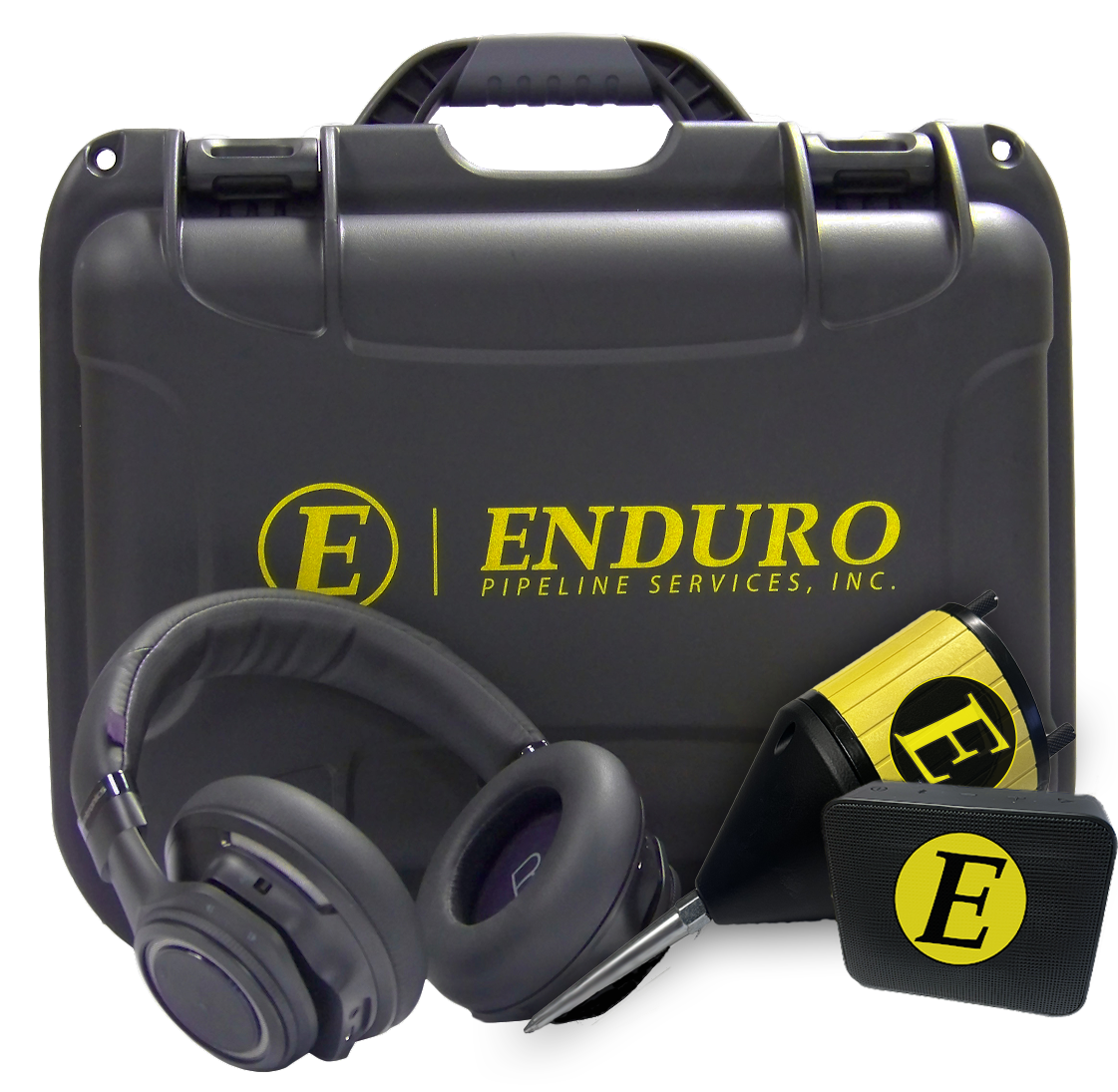
When every run counts, you can’t afford guesswork. The Enduro Wireless Geophone (EWG-1) makes pig tracking simple, accurate, and stress-free — providing operators with a reliable way to detect pig passage without the hassle of wires or bulky setups.
Built for the field, trusted by operators, and backed by Enduro’s decades of pigging expertise, the EWG-1 delivers performance you can count on.
Why Choose the Enduro Wireless Geophone?
- Wireless freedom – Bluetooth headset & speaker keep you mobile on the ROW
- Crystal-clear sound – Amplifies normal noises created by pig passage
- Long life – Up to 30 hours of ground probe operation
- Built for the field – Rugged, compact, watertight case designed for pipeline conditions
- Trusted by operators – Backed by Enduro’s proven pig tracking expertise
What’s in the Kit:
- EWG-1 Amplifier
- (2) sets of 4 "AA" batteries
- Bluetooth headset
- Bluetooth speaker
- High-impact, o-ring sealed watertight carry case
eFeatures at a Glance
- Adjustable volume control
- Ground probe powers up to 30 hours of operation
- High-quality audio
- Rechargeable headset
- Industrial-grade, rugged case
- Compact size
Learn more about our Wireless Geophone
Standard Geophone
It can be structured the same way as the wireless
Kit Includes:
- Amplifier unit
- Headset
- Ground probe
- FM transmitter
- High-impact, o-ring sealed watertight carry case
- 1 set of 4 "AA" batteries
Features:
- Volume control
- Ground probe powers up to 30 hours of operation
- High quality audio
- Industrial grade, rugged case
- Compact size
Pig Popper

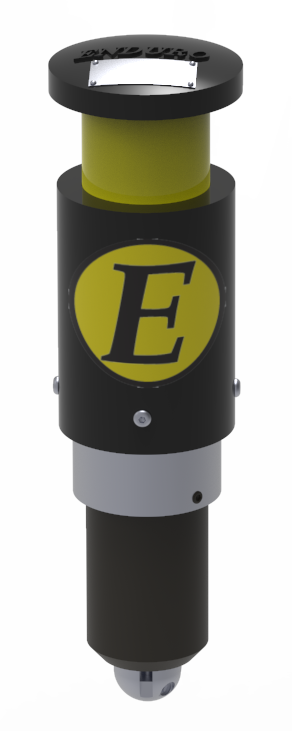
When precision matters, the Enduro Pig Popper® gives operators a reliable, no-doubt signal of pig passage. Designed, patented, and made in the USA, the Pig Popper has been trusted across the oil & gas industry for decades — combining rugged durability with simple installation and unmistakable alerts.
Learn More About the Pig Popper®
The Enduro Pig Popper is available in several different options
- Omnidirectional trigger – Avoids malfunctions common with bi-directional signals
- Stainless steel construction – Built tough for long service life
- Simple installation – Fits most existing 2” fittings
- High-contrast indicator – 360° visibility for no-doubt observation of pig arrival
- Optional strobe light – High-power illumination for nighttime or low-light operations
- SCADA-ready – Electrical and combo options integrate seamlessly with monitoring systems
- Made in the USA – Patented, proven, and trusted for decades
Available Options
- Manual Visual Alert – Reset manually, provides a high-contrast visual signal
- Combo – Electrical/Manual Visual Alert – Adds electrical integration while maintaining manual backup
- Electrical Alert – Connects directly to SCADA for automated monitoring
Cable Extension System
Enduro’s new cable extension system allows sub-grade installation of the Pig Popper in any depth of cover — up to 18 feet.
- Excess cable is coiled and covered during backfill — no need for custom lengths.
- Retrofittable to any Enduro Pig Popper in the field.
- Provides flexibility to adjust installation depth as site conditions change.
Why Operators Trust Enduro
Other pig signals may misfire or fail under pressure shifts. The Pig Popper is pressure-compensated, meaning it automatically adjusts to operating pressure without the need to swap springs or reset settings. Backed by Enduro’s Tracking Division and decades of field use, the Pig Popper remains the most reliable intrusive pig signal available today.
Order your Pig Popper today — available in manual, combo, and electrical configurations. Bulk pricing available.
👉 [Shop Now – Pig Popper®]
📞 Questions about installation or retrofitting? Call 800-752-1628 to talk with our tracking experts.
Non-Intrusive Pig Sensor
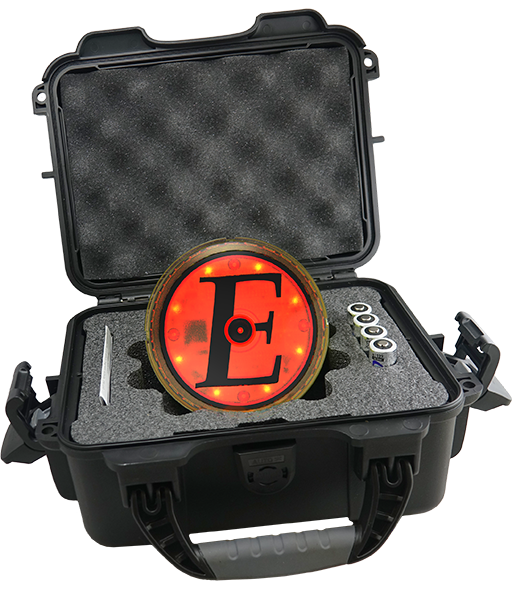
Enduro has designed the Non-Intrusive Pig Sensor to detect a change in the magnetic field as a pig runs through a pipeline and under the unit. Each NIPS is equipped with a strong rare-earth magnet on the base that attaches directly to the pipe. It is a simple, lightweight, portable, and cost-effective unit destined to be your next piece of standard tracking equipment.
Unit Includes:
- Non-Intrusive Pig Sensor unit
- (2) sets of lithium CR123 batteries
- Instruction card
- High impact, O-Ring sealed watertight carrying case
- https://youtu.be/ffK5a2t_NQY
Learn more about our Non-Intrusive Pig Sensor
RX-102
RX-102 Tracking Receiver
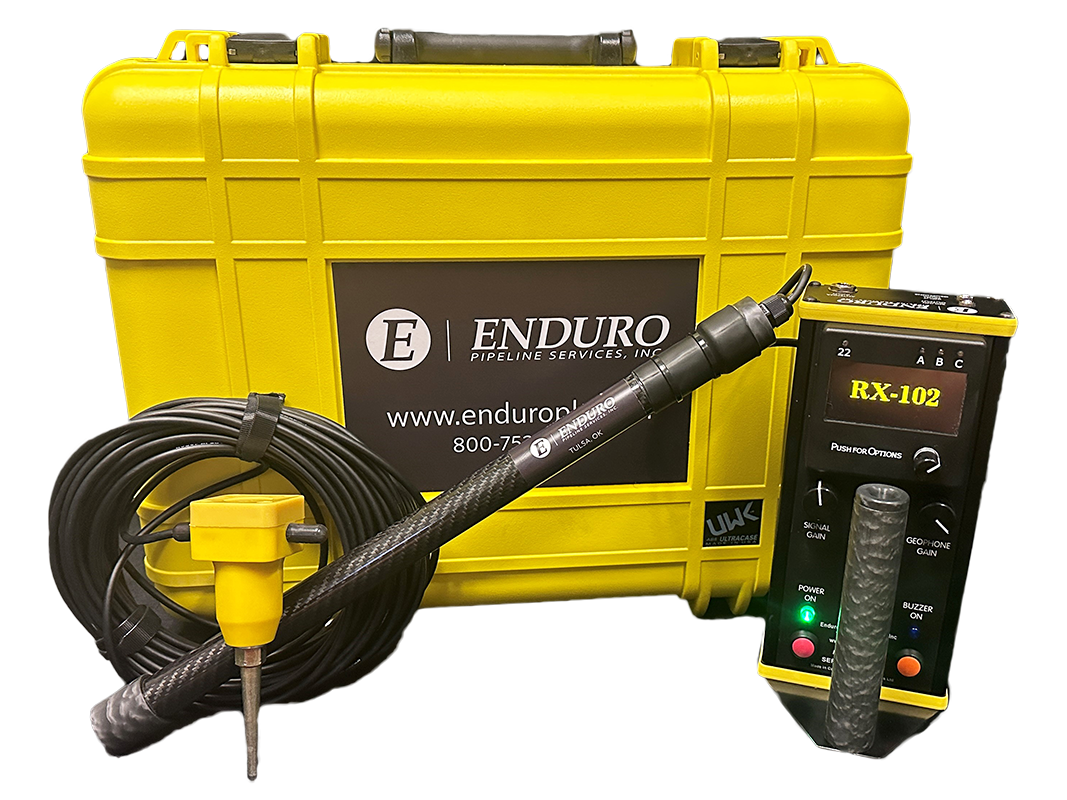
Enduro’s RX-102 Tracking Receiver is a complete 22 Hz and Acoustic (Geophone) tracking solution with a built-in geophone amplifier.
Tracking Receiver RX 102 Kit Includes:
- Weather resistant receiver with built-in geophone amplifier
- External wand antenna with 6' cable
- 50' antenna extension cable
- Geophone probe with 50' cable
- 6' vehicle stereo audio cable
- (1/8 in or 3.5 mm jack)
- Impact-resistant, weatherproof hard case
- 5- C Alkaline Batteries
- RX-102 Manual
Common Pipeline Pig Tracking Challenges:
Difficult Terrain and Remote Locations
Tracking pigs in remote or congested areas can create visibility and communication challenges for field crews.
High Noise Environments
Industrial facilities and compressor stations may interfere with certain tracking methods, making equipment selection important.
Tracking During Inline Inspection
ILI runs often require precise location verification for anomaly correlation and operational monitoring.
Temporary Tracking Requirements
Some projects require non-intrusive or temporary tracking systems that can be repositioned easily without pipeline modifications.
Learn how pig tracking equipment works, including transmitters, receivers, and non-intrusive sensors, by checking out our Pipeline Pig Tracking information page.
Pipeline Cleaning Services
Learn more about Enduro's complete Pipeline Cleaning Services.
Need Help Choosing a Pig Tracking Method?
The right tracking method depends on pipeline conditions, accessibility, operating requirements, and how the pig needs to be detected or located. Enduro can help identify the appropriate tracking equipment for the application.
Discuss your tracking application
Call: 800-752-1628
Did You Know?
Many inline inspection runs rely on tracking equipment to help verify tool movement, correlate inspection activity, and improve operational visibility throughout the pipeline.
Do you need to purchase multiple products or place a large order? Contact Matt Hodson matth@enduropls.com for bulk pricing or call 800-752-1628.
Looking for all in-stock tracking equipment? Purchase now at our online Enduro Shopify Store
transmitters
New Title
380-12-AS TRANSMITTER
- 11.0" (279.4mm) x 3.00" (76.2mm)
- Battery Life: 380 hours
- Open Air Range: 60 feet
- Max Pressure: 1500 psi
380-12-AT TRANSMITTER
- 12.50" (317.5mm) x 3.50" (88.9mm)
- Battery Life: 380 hours
- Open Air Range: 60 feet
- Max Pressure: 1500 psi
380-12-SSC TRANSMITTER
- 7.75" (196.85 mm) x 3.75" (95.25mm)
- Battery Life: 400 hours
- Open Air Range: 80 feet
- Max Pressure: 1500 psi
ET531X100 TRANSMITTER
- 5.31" (134.9mm) x 1.00" (25.4mm)
- Battery Life: 70 hours
- Open Air Range: 40 feet
- Max Pressure: 2500 psi
ET419X100 TRANSMITTER
- 4.19" (106.4mm) x 1.00" (25.4mm)
- Battery Life: 70 hours
- Open Air Range: 30 feet
- Max Pressure: 2500 psi
- 6" x 10.125"
- 16 D Cell Batteries
- Open Air Range: 80 feet
- Max Pressure: 1500 psi
What Frequency Transmitter Should I Use?
There is no single transmitter frequency that works for every application.
Selection depends on several factors, including:
- Pipeline diameter
- Burial depth
- Pipeline product
- Soil conditions
- Tracking distance
- Pig size
Enduro offers multiple transmitter options to match different pipeline applications.
How Accurate Are Pipeline Pig Trackers?
Modern pig tracking systems can accurately locate pipeline pigs when the proper transmitter-receiver combination is selected for the application.
Tracking accuracy depends on:
- Burial depth
- Soil conditions
- Pipeline diameter
- Transmitter strength
- Receiver sensitivity
- Operator experience
Selecting the correct equipment significantly improves tracking reliability.
Tracking accuracy can also be affected by nearby electrical interference, pipeline depth, terrain, and operator experience. Selecting compatible transmitters and receivers for the application significantly improves reliability and reduces uncertainty during pig tracking operations.
What Is the Best Pipeline Pig Tracking Method?
There is no single tracking method that is best for every pipeline application.
The ideal solution depends on several factors, including:
- Pipeline diameter
- Burial depth
- Product being transported
- Cleaning or inspection objective
- Required tracking distance
- Accessibility
- Required level of confirmation
Many operators combine multiple tracking technologies, such as pig transmitters, Pig Poppers®, non-intrusive pig sensors, and wireless geophones, to improve visibility throughout a pig run.
Selecting the appropriate combination helps improve operational awareness, reduce uncertainty, and support successful cleaning and inline inspection projects.
Frequently Asked Questions
How do pipeline pig trackers work?
Pipeline pig trackers locate cleaning pigs and inline inspection (ILI) tools as they travel through a pipeline. A transmitter installed inside the pig emits a low-frequency electromagnetic signal that is detected above ground using compatible tracking equipment, such as a receiver, wireless geophone, or Pig Popper®. This allows operators to monitor pig movement, confirm passage, and accurately locate the pig during the run.
How do you locate a pipeline pig underground?
Pipeline pigs are typically located using a transmitter installed inside the pig and a compatible receiver on the surface. As the pig moves through the pipeline, the transmitter emits a signal that can be detected above ground. Technicians follow the pipeline route and monitor the signal strength to determine the pig's location, even when it is buried underground.
How do you track a stuck pipeline pig?
If a pipeline pig stops moving, tracking equipment can be used to locate its last known position. Operators use the transmitter signal to determine where the pig has stopped, allowing them to investigate possible causes such as debris accumulation, pipeline restrictions, pressure changes, or geometry challenges. Accurate pig tracking reduces troubleshooting time and helps operators develop an appropriate recovery plan.
What frequency transmitter should I use?
There is no single transmitter frequency that is best for every application. The appropriate transmitter depends on factors such as pipeline diameter, burial depth, product being transported, tracking distance, and soil conditions. Selecting the correct transmitter helps maximize signal strength and tracking accuracy throughout the pigging operation.
What is a Pig Popper®?
A Pig Popper® is an intrusive pig signaling device that confirms when a pipeline pig passes a specific location. Installed directly on the pipeline, it provides a positive indication of pig arrival without requiring excavation. Pig Poppers® are commonly used at launchers, receivers, valve locations, and other critical points where confirmation of pig passage is important.
How accurate are pipeline pig trackers?
Modern pipeline pig tracking systems provide highly accurate pig location when the proper transmitter and receiver combination is selected for the application. Tracking accuracy depends on factors such as pipeline depth, soil conditions, transmitter strength, pipeline diameter, and operator experience. Choosing the right equipment significantly improves tracking reliability.
Can inline inspection tools be tracked the same way as cleaning pigs?
Yes. Many inline inspection (ILI) tools use transmitters that allow operators to monitor tool movement throughout the inspection run. Tracking an ILI tool helps verify its location, confirm successful passage through critical pipeline features, and quickly identify if the tool stops or encounters an obstruction.
What tracking equipment do I need for pipeline pigging?
The right tracking equipment depends on your application. Common tracking systems include transmitters, receivers, wireless geophones, and Pig Poppers®. Factors such as pipeline size, product, burial depth, operating conditions, and project objectives all influence the best equipment selection. Enduro's technical specialists can help recommend the appropriate tracking solution for your project.