
How Do You Know a Pipeline Is Clean Enough?
One of the most common questions pipeline operators ask is: "How do we know when the pipeline is clean enough?"
The answer isn't as simple as counting the number of pig runs. Pipeline cleanliness depends on the type of pipeline, the product being transported, the contaminants present, and the purpose of the cleaning program.
Whether you're preparing for an inline inspection (ILI), hydrotest, product changeover, or routine maintenance, verifying pipeline cleanliness is an important step in protecting equipment and ensuring reliable results.
Table of Contents
- Why Pipeline Cleanliness Matters
- Is There a Standard for "Clean Enough"?
- What Are You Trying to Remove?
- How Operators Evaluate Pipeline Cleanliness
- Inspecting the Cleaning Pig
- Monitoring Debris Volumes
- Preparing for Inline Inspection (ILI)
- Common Signs More Cleaning Is Needed
- Can One Pig Run Be Enough?
- Frequently Asked Questions
Why Pipeline Cleanliness Matters
Pipeline cleaning is about more than improving flow efficiency.
Removing debris helps:
- Protect inline inspection tools
- Improve inspection data quality
- Reduce equipment wear
- Prevent filter plugging
- Remove construction debris
- Reduce contamination
- Prepare pipelines for hydrotesting
- Improve long-term pipeline integrity
Every cleaning program should have a clearly defined objective before the first pig is launched.
Is There a Standard for "Clean Enough"?
There is no universal cleanliness standard that applies to every pipeline. Instead, operators evaluate cleanliness based on the purpose of the cleaning operation.
For example:
Before Inline Inspection
The goal is to remove enough debris to allow inspection tools to maintain consistent contact with the pipe wall.
Before Hydrotesting
Cleaning focuses on removing loose debris that could damage equipment or interfere with testing.
Product Changeover
The objective may be to reduce contamination between products.
Routine Maintenance
Cleaning may simply remove accumulated deposits before they affect operations.
The acceptable level of cleanliness varies depending on the project.
What Are You Trying to Remove?
Different contaminants require different cleaning strategies.
Common materials include:
- Black powder
- Iron oxide
- Iron sulfide
- Mill scale
- Welding debris
- Sand
- Dirt
- Paraffin
- Wax
- Scale
- Sludge
- Rust
Understanding the type of debris helps determine when cleaning has been successful.
How Operators Evaluate Pipeline Cleanliness
Operators don't rely on a single indicator.
Instead, they evaluate several factors together.
Cleaning Pig Condition
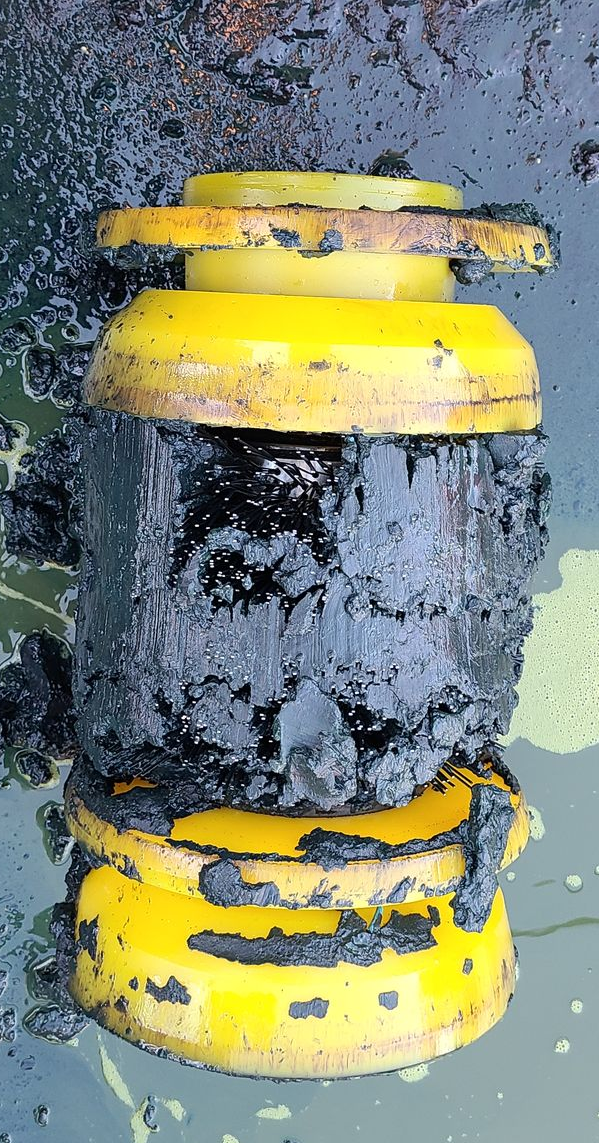
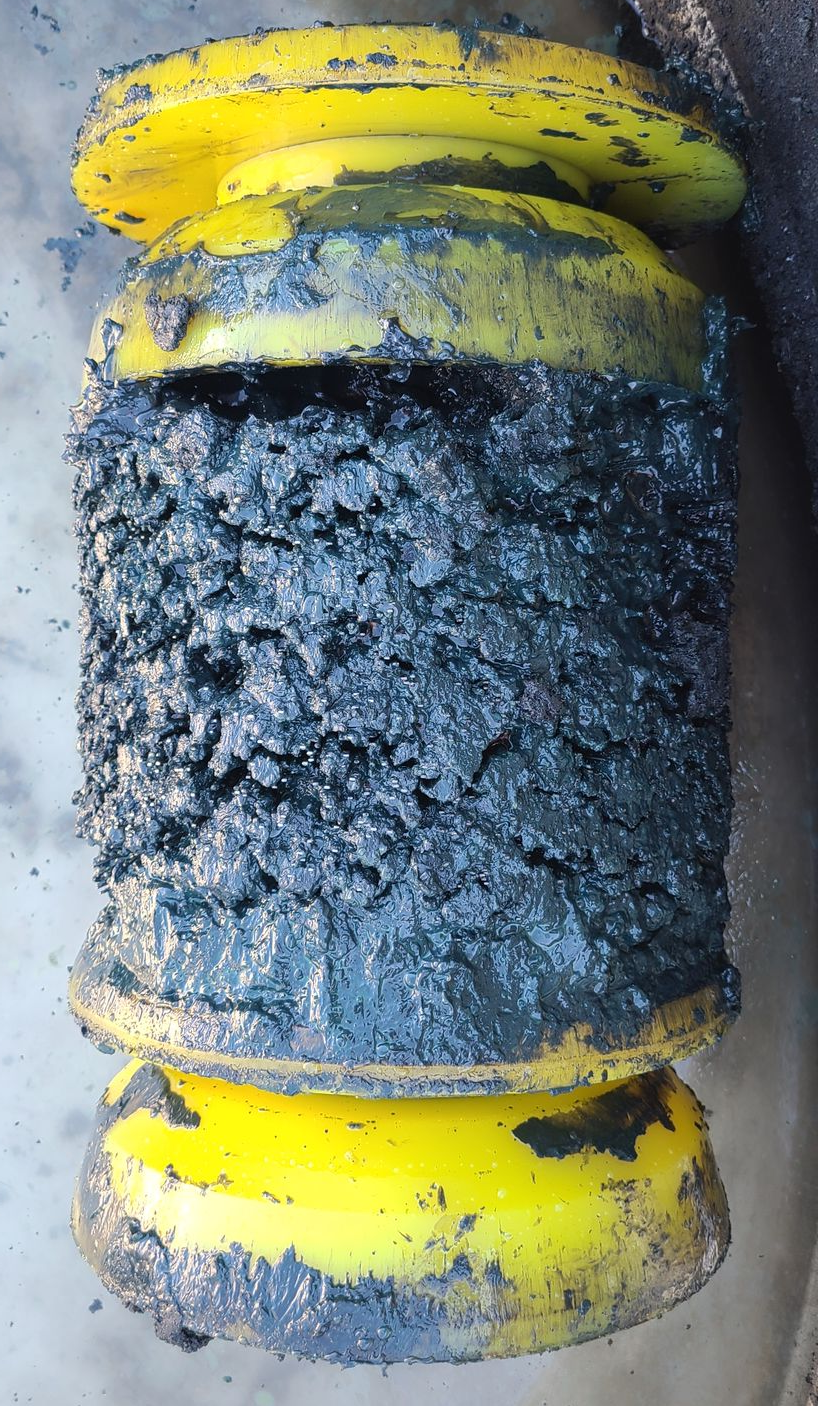
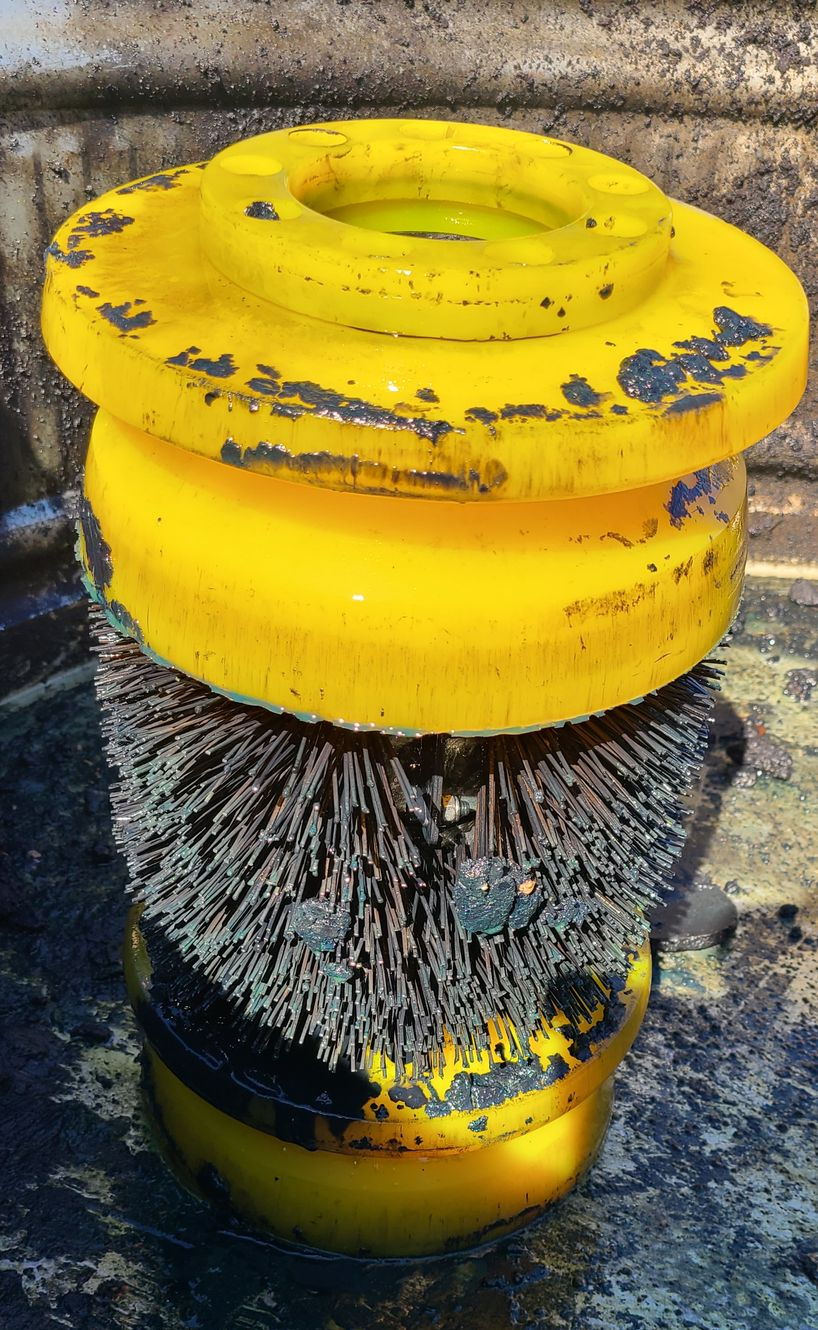
One of the easiest ways to assess progress is to inspect each cleaning pig upon receipt.
Questions include:
- How much debris is present?
- What type of debris is it?
- Is the amount decreasing?
- Are deposits becoming lighter?
- Are magnets fully loaded?
- Are brushes showing heavy wear?
Comparing pigs from multiple cleaning runs often shows whether the pipeline is becoming cleaner.
Debris Volume
Many operators monitor the amount of debris recovered after each run.
As cleaning progresses, the amount of recovered material often decreases.
Although every pipeline is different, a consistent reduction in debris is generally a positive sign.
Type of Debris
The type of debris matters just as much as the amount.
For example: Large mill scale flakes may disappear after early cleaning runs, while fine black powder continues to be removed during later runs.
Did You Know?
There isn't a universal test for pipeline cleanliness. Instead, operators evaluate the condition of the cleaning pig, the debris recovered, cleaning objectives, and overall results to determine whether a pipeline is ready for service or inline inspection.
Preparing for Inline Inspection (ILI)
Preparing for inline inspection often requires a higher level of cleanliness than routine maintenance.
Inspection tools depend on consistent contact with the pipe wall.
Excessive debris may:
- Lift sensors away from the pipe wall
- Reduce data quality
- Interfere with magnetic flux leakage tools
- Increase analysis uncertainty
- Require additional cleaning before inspection
Many operators perform multiple cleaning runs before launching an inspection tool.
Related Article
Common Signs More Cleaning Is Needed
Your pipeline may require additional cleaning if:
- Cleaning pigs continue returning heavily loaded with debris
- Magnets are completely covered with ferrous particles
- Filters plug frequently
- Black powder continues appearing after multiple runs
- Heavy mill scale remains
- Inspection tools experience excessive noise
- Pressure losses remain unusually high
- Debris continues collecting in separators
These indicators suggest contaminants remain inside the pipeline.
Can One Pig Run Be Enough?
Sometimes.
Many newly cleaned pipelines or pipelines with routine maintenance programs require only a few cleaning runs.
However, pipelines containing significant black powder, mill scale, paraffin, or construction debris often require multiple passes using progressively more aggressive cleaning pigs.
Typical cleaning programs may include:
- Initial cleaning pig
- Brush pig
- Magnetic cleaning pig
- Additional cleaning pigs
- Verification cleaning run
- Inline inspection tool
Every pipeline is different.
Why Enduro Focuses on Cleaning Programs
Rather than recommending a single cleaning pig, Enduro works with operators to develop cleaning programs based on pipeline conditions and project goals.
A cleaning program may combine:
- Urethane cleaning pigs
- Brush pigs
- Magnetic cleaning pigs
- Studded cups
- Multiple cleaning passes
The objective is not simply to launch a pig—it is to help the operator achieve the desired level of cleanliness for the application.
Still Wondering If Your Pipeline Is Ready?
Determining whether a pipeline is clean enough for inspection isn't always straightforward. If you'd like another perspective before your next run, we're here to help.
Frequently Asked Questions
How do you know if a pipeline is clean enough for ILI?
The pipeline should be clean enough for the inspection tool to maintain consistent contact with the pipe wall and collect reliable data. Operators often verify this through multiple cleaning runs, pig inspections, and debris evaluation.
Is there an industry cleanliness standard?
No. The acceptable level of cleanliness depends on the purpose of the cleaning program, the pipeline, and the inspection requirements.
Can one pig run clean a pipeline?
Sometimes, but many pipelines require multiple cleaning runs to remove accumulated debris effectively.
Should every cleaning pig be inspected?
Yes. Examining each pig after retrieval provides valuable information about the type and amount of debris remaining in the pipeline.
Does black powder mean the pipeline isn't clean?
Not necessarily. Some black powder may continue to be removed over several cleaning runs. Operators typically look for decreasing debris volumes and improved pig condition over time.
Not Sure if Your Pipeline Is Clean Enough?
Determining when a pipeline is ready for inline inspection or maintenance isn't based on a single measurement. It requires evaluating the type of debris, the results of each cleaning run, and the overall condition of the pipeline.
Enduro's technical specialists can help you develop a cleaning program tailored to your pipeline and inspection goals.
Call 800-752-1628 to discuss your project or contact our team for expert guidance.