
What Is Mill Scale in Pipelines?
Mill scale is a hard, brittle layer of iron oxide that forms on the surface of carbon steel during manufacturing processes such as hot rolling, welding, and heat treatment. As pipelines are placed into service, mill scale can break loose from the pipe wall and become a source of debris that affects pipeline performance, cleaning operations, and inline inspection (ILI).
Although mill scale is a normal byproduct of steel manufacturing, excessive amounts inside a pipeline can contribute to flow restrictions, contaminate products, increase debris loads, and interfere with inspection tools. Understanding how mill scale forms and how to remove it is an important part of maintaining pipeline integrity.
Table of Contents
- What Is Mill Scale?
- How Does Mill Scale Form?
- What Does Mill Scale Look Like?
- Which Pipelines Contain Mill Scale?
- Why Is Mill Scale a Problem?
- Mill Scale vs. Black Powder
- How Is Mill Scale Removed?
- Which Cleaning Pigs Work Best?
- Can Mill Scale Affect Inline Inspection?
- Frequently Asked Questions
What Is Mill Scale?
Mill scale is a hard, brittle layer of iron oxides that forms on the surface of carbon steel when the steel is exposed to high temperatures during manufacturing processes such as hot rolling, welding, and heat treatment. In pipelines, mill scale can eventually crack or break away from the pipe wall, becoming loose debris that must be managed through pipeline cleaning.
It typically consists of:
- Iron oxide (FeO)
- Magnetite (Fe₃O₄)
- Hematite (Fe₂O₃)
When the pipeline begins operating, vibration, pressure changes, pigging, and normal flow can cause this brittle layer to crack and break away from the pipe wall.
Those loose pieces eventually become debris inside the pipeline.
What Does Mill Scale Look Like?
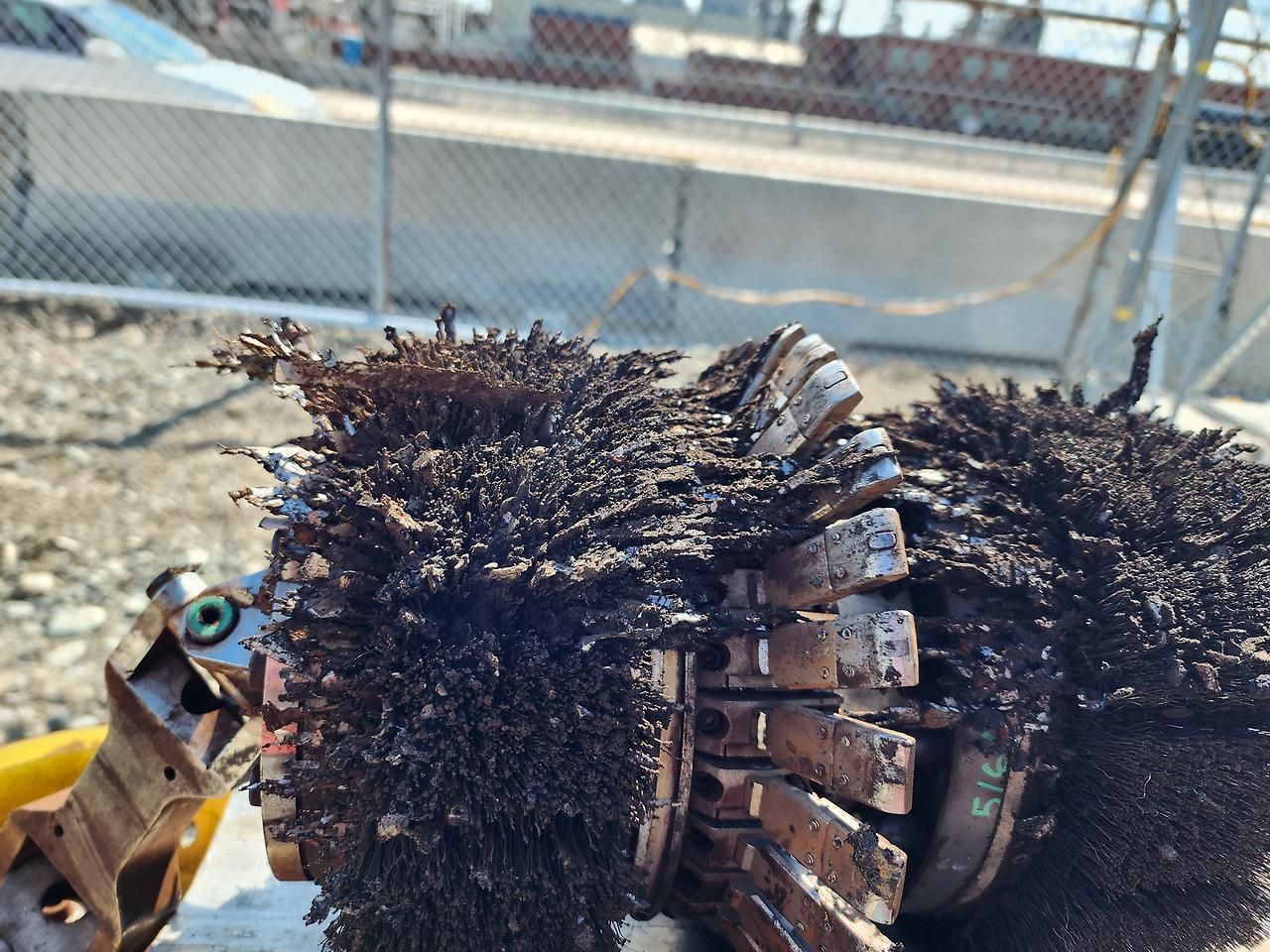
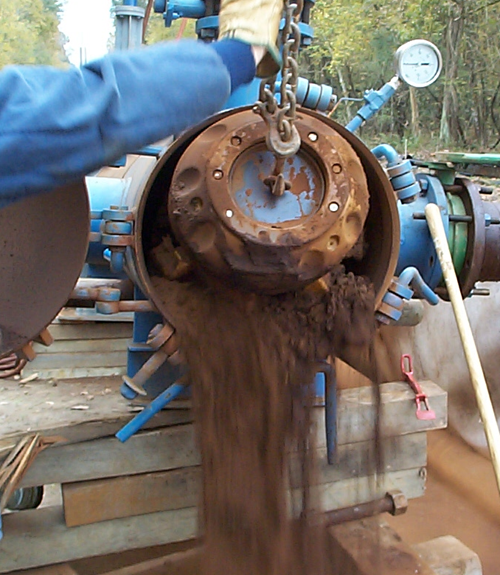
Mill scale typically appears as dark gray, blue-black, or black flakes, chips, or thin layers of iron oxide that form during steel manufacturing and welding. In operating pipelines, it is often found mixed with rust, black powder, welding debris, or other contaminants rather than occurring on its own.
Unlike wax or paraffin, mill scale is hard and does not smear.
Unlike black powder, mill scale usually consists of larger flakes rather than very fine particles.
Did You Know?
Mill scale is not the same as rust. Mill scale forms during steel manufacturing, while rust develops over time as steel corrodes in the presence of oxygen and moisture. However, mill scale can eventually break down and contribute to corrosion products found inside a pipeline. If it isn't removed before commissioning, loose mill scale can break free during operation, contribute to debris accumulation, and affect cleaning pig and inline inspection performance.
How Does Mill Scale Form?
Mill scale forms when steel is heated during manufacturing.
Common sources include:
- Hot rolling
- Pipe manufacturing
- Welding
- Heat treating
- Fabrication
Although much of the scale is removed before a pipeline enters service, some remains attached to the pipe wall.
Over time it may loosen and enter the flow stream.
Which Pipelines Contain Mill Scale?
Mill scale is commonly found in:
- Newly constructed pipelines
- Recently fabricated piping systems
- Pipelines after major repairs
- New compressor stations
- New meter stations
- Pipelines that have undergone welding modifications
Older pipelines may also contain mill scale that continues breaking loose years after installation
Why Is Mill Scale a Problem?
Mill scale can:
- Restrict product flow
- Increase pressure losses
- Plug filters
- Increase cleaning debris
- Damage equipment
- Increase wear
- Interfere with pigging
- Affect inline inspection data
Large pieces can also collect ahead of a cleaning pig, requiring multiple cleaning runs.
Mill Scale vs. Black Powder
Mill Scale
- Forms during steel manufacturing
- Large flakes or chips
- Hard and brittle
- Iron oxide layer
- Common in new construction
Black Powder
- Forms during pipeline operation
- Fine powder
- Fine, dusty particles
- Mixture of iron oxides, sulfides, and contaminants
- Common in operating gas pipelines
Although they are different materials, both are commonly removed during cleaning programs.
How DO YOU REMOVe Mill Scale from a pipeline?
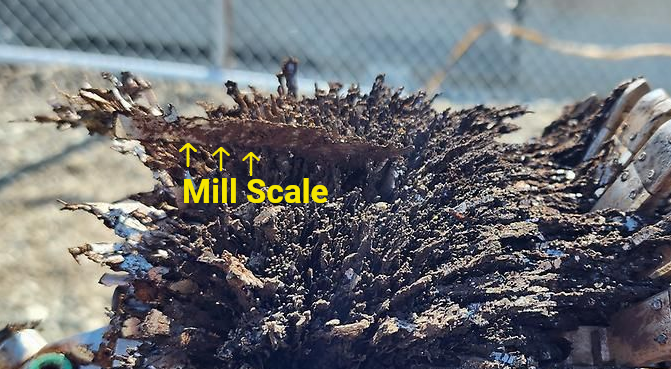
Mill scale can be removed from a pipeline through mechanical cleaning using appropriately configured cleaning pigs. Depending on the severity and condition of the deposits, brushes, scraper blades, studded cups, magnets, or other specialized cleaning components may be used as part of a progressive cleaning program.
Cleaning programs often use:
Brush Pigs
Remove loose scale from the pipe wall.
Magnetic Cleaning Pigs
Capture ferrous mill scale after it breaks loose.
Aggressive Cleaning Pigs
Studded cups, blades, or scraper elements remove stubborn deposits.
Progressive Cleaning Programs
Many operators begin with less aggressive pigs before progressing to heavier cleaning configurations.
Which Cleaning Pigs Work Best?
The best pig depends on:
- Amount of scale
- Thickness
- Pipeline diameter
- Product
- Geometry
- Cleaning objective
Many cleaning programs combine:
- Brushes
- Magnets
- Studded cups
- Scrapers
Custom pig design configurations.
Can Mill Scale Affect Inline Inspection?
Yes.
Mill scale can:
- Reduce tool sealing
- Increase sensor lift-off
- Create excessive inspection noise
- Affect magnetic inspection tools
- Reduce inspection accuracy
Many operators remove as much mill scale as possible before launching an inline inspection tool.
Frequently Asked Questions
Is mill scale the same as black powder?
No. Mill scale forms during steel manufacturing, while black powder develops during pipeline operation.
Is mill scale magnetic?
Yes. Much of mill scale contains iron oxides that are attracted to magnets, making magnetic cleaning pigs effective for capturing loosened material.
Does every pipeline contain mill scale?
Not every pipeline, but new steel pipelines and recently fabricated piping systems commonly contain mill scale.
Can mill scale damage inline inspection tools?
Heavy mill scale can interfere with tool performance, increase debris loads, and reduce inspection data quality if not removed before inspection.
What removes mill scale?
Brush-equipped cleaning pigs, magnetic cleaning pigs, scraper pigs, and progressive cleaning programs are commonly used to remove mill scale.
What contaminants affect pipeline inspections?
Pipeline contaminants such as mill scale, black powder, paraffin, wax, rust, welding slag, sand, liquids, and corrosion products can interfere with cleaning efficiency and inline inspection (ILI) tools if not removed before inspection.
Need Help Removing Mill Scale?
Mill scale removal often requires more than a single cleaning run. Enduro's technical specialists can recommend the right cleaning pig configuration and develop a cleaning program based on your pipeline, debris type, and operational goals.
Call
800-752-1628 to discuss your application or
contact our team for expert guidance.