Time to Destination: The Journey Begins Long Before Field Technicians Reach the Job Site

Emrys Williams Field Technician Cell/Direct: 918-405-0541
TULSA, Okla. — For field technicians, arriving at a job site is only the final step of a much longer process. Long before an in-line inspection (ILI) smart tool enters a pipeline, technicians have already spent hours preparing equipment, inspecting vehicles, planning routes, and navigating hundreds of miles of roadway under changing conditions.
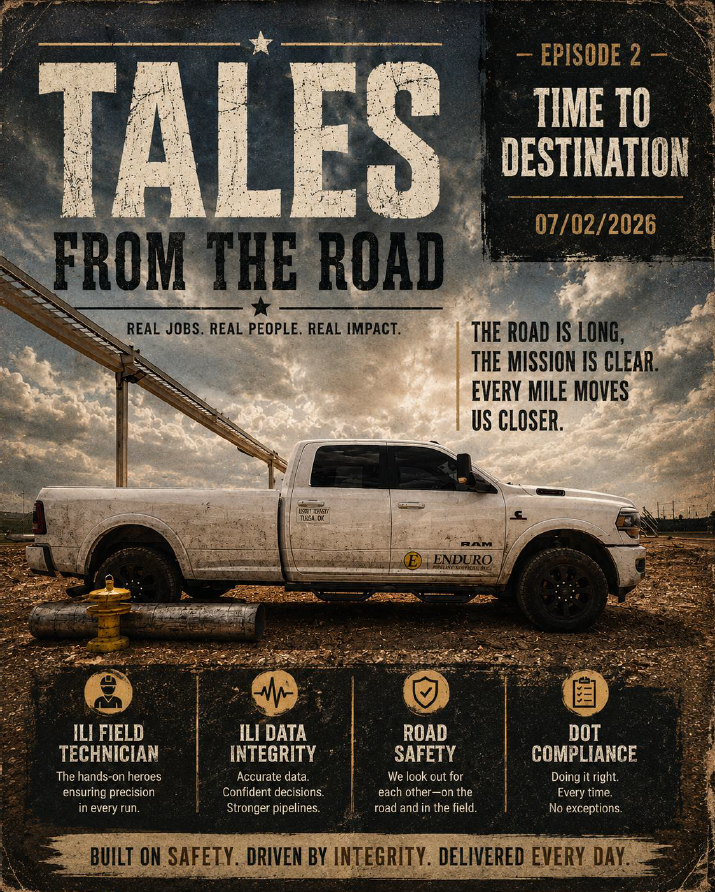
This month's edition of Tales From the Road highlights the often-overlooked challenges technicians face while traveling to project locations and emphasizes that safe driving is as critical to project success as the work performed in the field.
Following last month's discussion on project preparation—including inspecting ILI smart tools, equipment loading, and final pre-departure checks—the focus now shifts to travel planning, vehicle safety, and personal readiness.
One of the first considerations for field personnel is compliance with Department of Transportation (DOT) regulations. As a DOT-compliant company operating under a non-CDL driver program, field technicians must adhere to federal Hours of Service requirements. Drivers are limited to a maximum of 11 hours behind the wheel after taking the required rest periods, with electronic logging devices (ELDs) used to accurately record driving time.
While project schedules are typically planned to avoid reaching maximum driving limits, longer assignments occasionally require technicians to approach those limits before stopping for mandatory rest.

Before any trip begins, technicians perform a comprehensive inspection of their assigned vehicle. The inspection includes checking fluid levels, tire pressure, lighting systems, warning indicators, and the overall mechanical condition of the vehicle. Familiarity with a
vehicle's normal operation allows drivers to recognize unusual sounds, vibrations, or performance issues before they become safety hazards.
Personal protective equipment is also carefully inspected and packed before departure. Standard field gear includes fire-resistant clothing (FRC), safety glasses, steel-toe boots, impact-resistant gloves, high-visibility vests, and four-gas monitors. These monitors serve as an early warning system by detecting hazardous gases, including hydrogen sulfide (Hâ‚‚S), allowing technicians to evacuate an area if dangerous concentrations are detected.
Once equipment, vehicles, and travel plans have been verified, the journey begins.
A hypothetical assignment from Tulsa, Oklahoma, to Pennsylvania illustrates the variety of challenges encountered during a typical project mobilization.
The route begins on Interstate 244 before merging onto Interstate 44 and the Will Rogers Turnpike toward St. Louis. Under ideal weather conditions, the drive appears straightforward. However, road construction quickly introduces lane reductions, active construction equipment, merging traffic, and reduced speed zones. Distracted drivers, speeding vehicles, and heavy commercial truck traffic further increase the risks.
Remarkably, many of these hazards can be encountered within the first 15 miles of travel.
As the journey continues, weather conditions may deteriorate from clear skies to heavy rain, reducing visibility and slowing traffic. Scheduled fuel stops provide opportunities for drivers to stretch, eat, and reduce fatigue before returning to the road.
After more than seven hours and approximately 400 miles of driving, additional delays caused by construction or traffic accidents may leave drivers without enough remaining hours in their electronic logbooks to continue legally. Rather than pushing beyond safe limits, technicians stop for the evening, secure lodging, and prepare for the next day's travel.
The second day begins with another complete vehicle inspection to verify that equipment remains secure and that no damage occurred overnight. Once travel resumes, technicians often encounter metropolitan traffic where congestion, aggressive driving, excessive speeding, and frequent lane changes create additional hazards.
Safe lane changes remain one of the most important defensive driving practices. Drivers are encouraged to signal well in advance, monitor mirrors, check blind spots, and complete one lane change at a time before moving into another lane. Attempting to cross multiple lanes simultaneously increases the likelihood of collisions and reduces reaction time for surrounding motorists.
Another common hazard occurs when drivers wait until the last possible moment to merge into exit lanes. These sudden movements often force surrounding traffic to brake abruptly, creating chain-reaction collisions, particularly when vehicles are following too closely.
Company leaders emphasize that defensive driving habits remain the best defense against these situations. Recommended practices include planning routes in advance, conducting regular vehicle inspections, allowing adequate travel time, maintaining safe following distances, respecting other motorists, taking scheduled rest breaks, and stretching periodically to reduce fatigue.

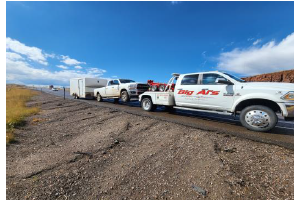
Unexpected challenges can also arise. Mechanical failures, for example, do not eliminate project responsibilities. When necessary, replacement vehicles—including rental trucks—may be used to ensure technicians can safely complete their assignments while maintaining project schedules.
The article also encourages employees to reflect on their own driving habits by asking themselves several questions, such as: What challenges have I faced on the road? Have any of my driving decisions increased the risk for myself or others? What changes can I make to become a safer driver? How can I contribute to a stronger culture of roadway safety?
After nearly 16 hours of travel and more than 1,000 miles across seven states, technicians eventually arrive at their destination. Although the job site marks the beginning of field operations, the work effectively began the moment the vehicle left the company yard.
For field technicians, mobilization involves much more than simply driving from one location to another. Every mile requires planning, awareness, discipline, and a commitment to safety—ensuring not only the successful completion of the project but also the safe arrival of every employee and every motorist sharing the road.
Learn More About Enduro Pipeline Integrity Solutions
Successful ILI projects start long before the inspection tool ever enters the launcher. From cleaning and tracking to geometry, MFL, deformation, and data quality solutions, Enduro Pipeline Services supports operators through every stage of the pipeline integrity process.
Whether you are preparing for an upcoming inspection run, troubleshooting cleaning challenges, or evaluating tool performance, our team is available to help.
Explore More:
• Pipeline Cleaning Services:
https://www.enduropls.com/cleaning
• Pipeline Cleaning Pigs:
https://www.enduropls.com/pipeline-cleaning-pigs
• Caliper & Geometry Inspection Tools:
https://www.enduropls.com/caliper-ddl
• MFL & Deformation Inspection Services:
https://www.enduropls.com/mfl-dfl
• Pipeline Pig Tracking Equipment:
https://www.enduropls.com/pipeline-pig-tracking-equipment
Want to Learn More?
Schedule an onsite meeting, technical discussion, or facility tour to see how Enduro supports pipeline operators across the industry.
📞 800-752-1628

This is paragraph text. Click it or hit the Manage Text button to change the font, color, size, format, and more. To set up site-wide paragraph and title styles, go to Site Theme.